|
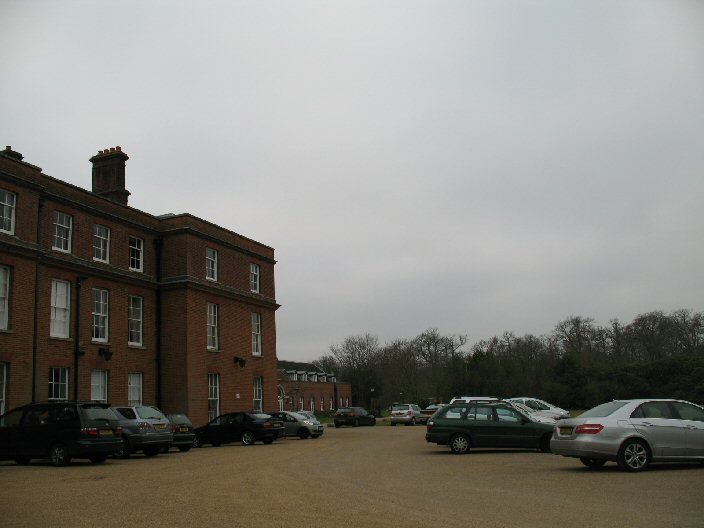
Set in the tranquil heart of Windsor Great Park, Cumberland Lodge was the perfect setting for
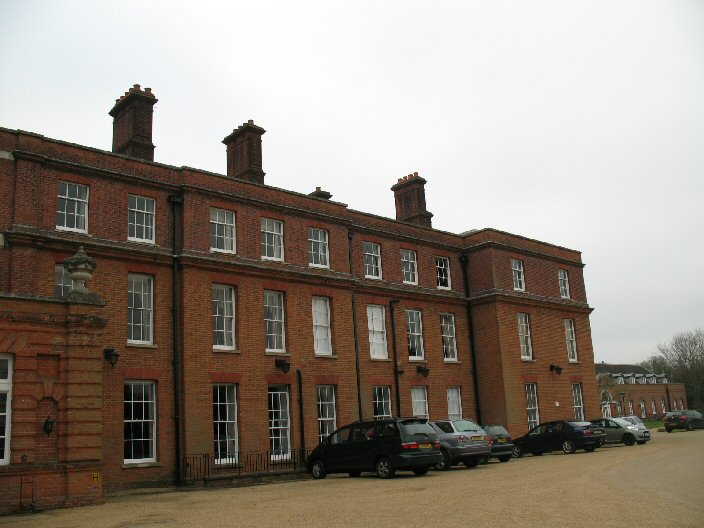
University of Readings ''Foundations of Enactive Cognitive Science'' conference. Built in 1652, close to Windsor Castle and Eton, and only made accessible to public conferences in 1947, the lodge is a place oozing with english charm and character. |
|
T.S. Eliot, Paul Tillich, Sir Karl Popper, Stanley Spencer, A.J. Ayer - to name just a few -
have all visited the lodge. And have used the unique settings as a backdrop for contemporary discussions on science, society etc. Queen Elizabeth II is the current patron of the lodge. For more about Cumberland Lodge see here. |
|
The pursuit of cognitive science is concerned with the scientific study of the mind. Interdisciplinary in nature, the discipline spans philosophy, cognitive psychology, neuroscience, artificial intelligence, linguistics, anthropology, social sciences, biology and physics - as well as any other discipline with a perspective on the workings of the mind.
Enactive cognitive science emerges from (these) diverse research interests, and has yet to mature into a discipline on its own....And, sure, keynotes from Mark Bickhard, Fred Cummins, Tom Froese, Thomas Fuchs and Kevin O'Regan, together with diverse contributions from oral presentations and posters, made it a very exciting event to attend.
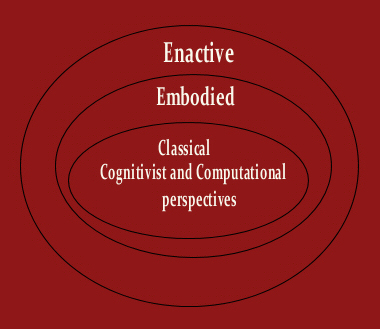
Enactive cognitive science distances itself from classical cognitivist and computational perspectives, by broadening the current focus on the brain and including the body and its relationship to the outside world.
The meeting provided a truly interdisciplinary forum that focused on the challenges and future directions of research for cognitive science.Discussions emphasized the need to revisit the theoretical foundations for embodiment in cognitive science, together with consequences for conventional computational models.
...
The meeting revisited Maturana and Varela's biological systems framework (*) that places cognition as knowledge, and knowledge as action, at the centre of how organisms bring forth their interaction with the world. Such approaches reconsiders the dependence on representation for cognitive processes.
The unity of the experience, we believe, can be explained by the unity of the activity itself, that is, by the fact that there is a coherent pattern of coordinated behavior that is responsive to external circumstances.Enactive Robotics: Frank Broz talked about ''Enactive development of turn-taking behaviours in a childlike humanoid robot: Interaction histories and short term memory''.
|
The iCub is a 1 metre high humanoid robot testbed for research into human cognition and artificial intelligence.
There are only 20 iCubs in the world. |
Speakers manage to synchronize such that corresponding points in the two parallel speech channels are no more than about 40 ms apart on average.Speech is highly coordinated (Some members of the audience didn't really believe that it could be that coordinated. But surely, it is highly coordinated).
This ability is all the more remarkable, as utterance-to-utterance variability, even within one speaker, would suggest that two speakers might have great difficulty in precisely timing their spoken durations to match those of another speaker.
Indeed, the degree of synchrony achieved seems to rule out any simple reactive account, in which one speaker listens and then acts.
Although enaction means many things to many people, a central feature of most if not all enactive approaches is an emphasis on the embodiment of cognitive agents and their embeddedness in a particular environment. Agent cannot be separated from environment nor cognition from lived experience.And followed up by saying that concepts are located in the interaction with the environment. Concepts need an agent to live in, but is in the interaction:
An enactive theory of concepts ultimately locates concepts not in the concept-possessing-and-using agent (say, as internal, a priori mental representations) nor in the agent's environment.In the end Parthemore had some interesting thoughts about language being parasitic to concepts (where language allows for higher levels of abstractions). Where, imho, it would have been very interesting to hear more about these links, and how it all fits within the enactive paradigm.
Concepts are enacted out of the dynamic interaction of the agent with the agent's environment.
When mental representations are being discussed, agent will be in the foreground and environment in the background; when affordances (An affordance is a quality of an object, or an environment, which allows an individual to perform an action. For example, a knob affords twisting) are being dicussed, environment will be in the foreground and agent in the background.
London Cab drivers' grey matter enlarges and adapts to help them store a detailed mental map of the city.Indeed, 40 percent of the brain is all about visualization.
Studies have shown that the hippocampus of the drivers has changed its structure to accommodate their huge amount of navigating experience. I.e. One particular region of the hippocampus, the posterior (or back), was bigger in the taxi drivers than in controls.
Qualia is the hard problem of consciousness.In How to build a robot that feels O'Regan continues:
Other questions like the question of why we have selves or why we can become aware of things and use them in our rational actions and thought, are considered not so hard.
...
Many people think there is a fundamental obstacle in dealing with the ''hard'' problem of consciousness.
...
Has led me to a new way of thinking about the "hard" kind of consciousness. In this, I consider that the feel of a sensory experience is not something which is somehow generated by the brain, but is rather a quality of how we interact with our environment.
I remember as a child asking my mother what a headache was like and never getting a satisfactory answer until the next day I actually got one. Many people have asked themselves whether their spouse or companion see colors the same way as they do!A robot (nowadays) needs to have its sensors calibrated, but a human doesn't.
Instead the sensorimotor view suggests that we should think of a feel in a new way, namely as a way of interacting with the world.
This may not make very much sense at first, so let's take a concrete example, namely the example of softness.
Rather, the softness of the sponge is a quality of the way we interact with sponges. When you press on the sponge, it cedes under our pressure. What we mean by softness is that fact...
...
Color is the philosopher's prototype of a sensory quality.
At first it seems counterintuitive to imagine that color sensation has something to do with sensorimotor dependencies: After all, the redness of red is apparent even when one stares at a red surface without moving at all.
(but) In fact what determines whether a surface appears red is the fact that it absorbs a lot of short wavelength light and reflects a lot of long wavelength light. But the actual amount of short and long wavelength light coming into the eye at any moment will be mainly determined by how much there is in the incoming light, coming from illumination sources.
...
Thus what really determines perceived color of a surface is the law that links incoming light to outgoing light. Seeing color then, involves the brain figuring out what that law is.
The obvious way to do this would be by sampling the actual illumination, sampling the light coming into the eye, and then, based on a comparison of the two, deducing what the law linking the two is.
One way they could do it is to experiment around a little bit, moving the surface around under different lights, and ascertaining what the law is by comparing inputs to outputs.
So in that respect the law can be seen as being a sensorimotor law.
...
Munsell chips are often used in color experiments. Their reflectance spectra are available for download off the web ...Some of the matrices had a special property: they were what is called singular...
In other words these matrices represent input - output laws that are in some sense simpler than the average run of the mill matrices.
...
As though those colors which tend to be given names, are precisely those simple colors that project incoming light into smaller dimensional subspace of the three dimensional space of possible lights.
...
On the other hand it does seem reasonable that names should most frequently be given to colors that are simple in the sense that when you move them around under different illuminations, their reflections remain particularly stable compared to other colors.
...
So in my opinion the finding that we are able to so accurately predict color naming from first principles, using only the idea of the sensorimotor approach, is a great victory for this approach.
Ultimately, what separates these views of the body is a disagreement about the status of the founding idea in cognitive science that cognitive processes are computational processes.Arguably, the 4EA (Embodied, Embedded, Extended, Enacted, Affective) movement within philosophy of cognitive science was launched 20 years ago with the publication of the book ''The Embodied Mind'' (Varela, Thompson and Rosch). Here cognition was understood in terms of the sense making activities of living organisms.
I.e. can the contribution of the body to cognition be understood along computational lines?
Reformists, in common with conservatives, retain the idea of cognition as computation, but they depart from the conservatives in seeking to enrich the traditional idea of computation, so as to open up space for body and environment to play a role in implementing information processing.The body can co-opt external tools and technologies into its problem solving routines, so that the tools and technologies combine with the body to extend and augment cognition.
The problem has a superficial resemblance to what is sometimes called the symbol-grounding problem. Which takes of from Searles well-known arguments that syntax is not sufficient for semantics.(See the section about Situated Conceptualization for more about Barsalou's ideas).
...
Harnad took up Searle's worry in arguing that the representations appealed to in computational explanations are meaningless because they are not ''grounded'' in the right way in perception and action...
Larry Barsalou agreed and put forward his account of concepts as perceptual symbols in response.
Barsalou proposed that we understand concepts as ''perceptual symbols'' or re-enactments of neural representations that originated in perception and action...
Thereby providing the missing link between the symbol and what it stands for in the external world.
In predictive coding models of brain function, the central problem facing our perceptual system is to learn about the world on the basis of states and changes to these states.When the predictions are correct, there is match between expected and actual input, and the result is perception.
The way our brains solve this problem is to learn statistical regularities relating to the ways in which sensory input tend to vary over space and time.
It is a near consensus that perceptual processing in the brain is organized hierarchically. Predictive coding models hypothesize that each layer in the hierarchy employs statistical knowledge to predict the current inputs it will receive from the layer below.
The predictive brain is, however, also a computational brain.I.e. Kiverstein ends the article with the conclusion that: Perception, affect and action can not be adequately accounted for by a linear model of causality in which perception provides input to a brain that then issues instructions to the body.
If we can give a predictive coding explanation of how the body gears into the world along the lines of the above, this would be to provide a computational explanation of how the body makes meaning...
...
Would it follow that victory goes to body functionalist - view or to the body conservative - view?
Not at all, the body enactivist understand embodiment in terms of bodily skills we draw on all the time, when we act unreflectively.
The brain might be coordinating a cascade of increasingly fine grained and detailed predictions. But all of this is taking place in the service of a sense making activity of an embodied agent.
Embedded in the wall of the gut, the enteric nervous system has long been know to control digestion. Now it seems it also plays an important role in our physical and mental well-being!And there is more!
...
Digestion is a complicated business, so it makes sense to have a dedicated network of nerves to oversee it. The ENS maintains the biochemical environment within different sections of the gut, keeping them at correct pH and chemical composition needed for digestive enzymes to do their work.
And, remember, eating is fraught with danger. The gut must stop potentially dangerous invaders, such as bacteria and viruses, from getting inside the body. In case any are detected, the gut brain must then trigger diarrhoea or alert the brain in the head, which might then decide to initiate vomiting.
Although they started out friendly, the computerized players soon stopped throwing the ball to the volunteer. It might seem like a trifling insult, but some subjects reported strongly to the slight - slumping in their seats or making a rude hand gesture at the screen.The social world can hurt us more deeply than virtual ball players though:
All the while, a functional MRI scanner recorded the volunteer's brain activity, revealing a surge in the dorsal anterior cingulate cortex (dACC), when they began to feel isolated (Science, vol 302, p. 290)
(Nb. the dACC is known to be an important part of the brain's pain network, determining how upsetting we find an injury. The response can vary depending on circumstances. Bumping your head might seem like a big deal in the office, but during a football game you might barely notice the blow).
As expected, the dACC and the anterior insula lit up in both cases. But surprisingly, the brain's sensory centers, which reflect the physical discomfort that accompanies a wound, also showed pronounced activity - the first evidence that the feeling of heartbreak can literally hurt.Which might explain the difference between introverts and extroverts: Extroverts have been shown to have a higher pain tolerance than introverts, and this is mirrored by their greater tolerance for social rejection!
So, much so that in the absence of social influences per se there is hardly any process, which allow us to identify the owner as typically ''human'', as research into abandoned childred has so abundantly demonstrated.We become humans trough transactions with other humans. Brains responds to cues we get from other people. We form each other in transactions.
I believe that cognitive science should replace the computationalist metaphor with an existential stance that centers on the living (biological) and lived (experimential) body.
I suggest that a more encompassing science of human nature must be able to intertwine an understanding of how the fundamental values that are governed by our matabolic existence are shaped by the enabling and constraining concerns of our socio-cultural existence.
To do so we need to be able to integrate dynamic processes at a range of time scales, and at a range of levels (individual, dyadic, social, cultural etc.), and we must be able to connect those dynamics with changes in the first-person experience of the people who are embedded in them.
All of these areas of research together form what has been called the paradigm of ''enaction''.
A chimpanzee can't understand quantum mechanics.....Actually, it is not even aware that it can't.
There is no reason to believe that our brains are matched to understanding every level of reality.And, sure, there are lots of problems for us out there.
|
''That the notion of a theory of everything rests
on an unproven assumption that the universe is inherently neat
and symmetrical. But, the very fact that the universe contains energy and matter is evidence against such symmetry, he says. Nothingness is neater than something, so the fact that the universe is full of stuff could mean that it is surprisingly messy at heart.'' NewScientist, May 7th 2011. Certainly, everyone knows that prediction is hard...(Even on ''small'' scales like the Earths weather and our financial systems). Weather predictions are not precise beyond 3 days. Predictions in economics mostly turn out to be false (Inflation rates are predictable only one month in advance. Look ahead two months and the mathematics show no predictability at all). NewScientist, April 10th 2010. And, following Marcello Gleiser, it is probably impossible to predict any sufficiently complex system that looks anything like our universe... So, much for the hopes of generations... (Sure, there are many interesting theories - E.g. Riemanns hypothesis - about the zeroes of the zeta function, that would give us a method for calculating primes - Which, according to physicist Dyson, are strangely linked to nuclear energy levels ...? But all of these theories are only close, to a theory about everything. For the Riemann hypothesis - No proof exist - and certainly - no one knows why prime numbers should have anything to do with atomic energy levels...) |
Time flows uphill for the Yupno: Western languages are full of spatial metaphors
for time. The past is behind us, and the future is stretching out ahead. What was once thought to be a universal embodied cognition of time is in fact a cultural phenomenon.... For the Yupno people, of Papua New Guinea, time flows uphill and is not even linear. In their time study with the Yupno, Nunez and colleagues find that the Yupno don't use their bodies as reference points for time. But rather their valley's slope and terrain. Analysis of their gestures suggests they co-locate the present with themselves, as do all previously studied groups (Picture for a moment how you probably point down at the ground when you talk about ''now.''). But, regardless of which way they are facing at the moment, the Yupno point uphill when talking about the future and downhill when talking about the past.[1]. So, yes, we might think it is natural to think of time as a straight line. But that is an illusion. It doesn't have to be that way.... |
On the question of how imperfect, inconsistently sensitive sense organs could produce a raw feel that presents itself as continuous and detailed. O'Regan declares this effect to be an illusion. Features of raw feel can only be observed through active interrogation, which necessarily presents them in detail.And his theory also makes some interesting predictions (According to Andrew Martin, in AISB No. 135):
For the quality of interaction to be consciously experienced, the being must also be consciously attending to that quality.Concerning the experienced ''what it is like'' of the experience, O'Regan thinks (in my understanding) this derives from objective aspects of this engagement (among them bodiliness, grabbiness, insubordinateness and richness), which indicate that the engagement is one with the real world and involves the real senses.
This stance has two important implications for what is not present in raw feel: Without conscious attendance raw feel are not felt, and without a notional sense of self experience cannot arise at all.
Babies and animals, therefore only experience pain, if they are considered to have developed a specific cognitive capability.
-Simon
Simon Laub
www.simonlaub.net